
Key Takeaways
- A continuum of care allows older adults to access multiple living options and support services within one connected community.
- Independent living, personal care, memory care, short-term rehabilitation, and long-term skilled care each provide different levels of support as needs change.
- Remaining in the same community can help preserve familiar routines, relationships, and surroundings during care transitions.
- Couples with different care needs may be able to stay on the same campus while receiving individualized support.
- Choosing a community with a continuum of care provides greater flexibility and helps families prepare for future changes with confidence.
What “Continuum of Care” Really Means
Planning for a loved one’s future often raises questions that do not have simple answers. You may be thinking about what they need today, while also wondering how those needs could change in the years ahead. A continuum of care offers a way to plan for both without feeling like every transition requires starting over somewhere new.
A continuum of care means one community offers multiple living options and support services on the same campus. As your loved one’s needs evolve, they may be able to move between lifestyles while remaining in a familiar environment surrounded by people who already know them. Rather than searching for a new community each time circumstances change, families can focus on helping their loved one continue living well.
The Spectrum of Senior Living Care
No two people follow the same path as they grow older. Some remain active and independent for years, while others benefit from additional support after an illness, injury, or health diagnosis. A true continuum of care provides flexibility, allowing support to grow alongside each person’s needs.
Independent Living
Independent living is designed for older adults who want to spend less time worrying about household responsibilities and more time enjoying the things they love. Instead of maintaining a home, residents can focus on hobbies, friendships, wellness programs, and community events while still maintaining their independence. It creates opportunities for connection without giving up privacy or personal choice.
Personal Care
Sometimes everyday routines become a little more difficult to manage alone. Personal care provides support with daily activities such as dressing, bathing, medication management, and mobility while encouraging each person to remain as independent as possible. The goal is to provide the right amount of assistance without taking away the routines that matter most.
Memory Care
A dementia diagnosis changes how families think about daily life, but it does not change the person at the center of it. Memory care creates a secure, structured environment where routines remain consistent and each day is designed to support comfort, engagement, and dignity. Team members take time to learn each person’s preferences, history, and personality so care reflects the individual rather than the diagnosis.
Short-Term Rehabilitation
After surgery, an illness, or a hospital stay, recovery sometimes requires extra support before returning home or resuming everyday routines. Short-term rehabilitation provides a comfortable place to recover while receiving therapy and professional oversight during the healing process.
The focus is on rebuilding strength, confidence, and independence at a pace that feels appropriate for each person. Within a continuum of care, short-term rehabilitation can also provide flexibility when unexpected situations arise.
Long-Term Skilled Care
Some health conditions require ongoing nursing support that extends beyond occasional assistance with daily activities. Long-term skilled care provides around-the-clock nursing services, medical oversight, and personalized support for people with more complex health needs. While healthcare is an important part of daily life, comfort, dignity, and meaningful engagement remain equally important.
Why the Continuum of Care Model Works
Life rarely stays the same forever, and senior living should be able to adapt alongside it. A continuum of care removes much of the uncertainty families often feel when planning for the future because additional support is already available within the same community.
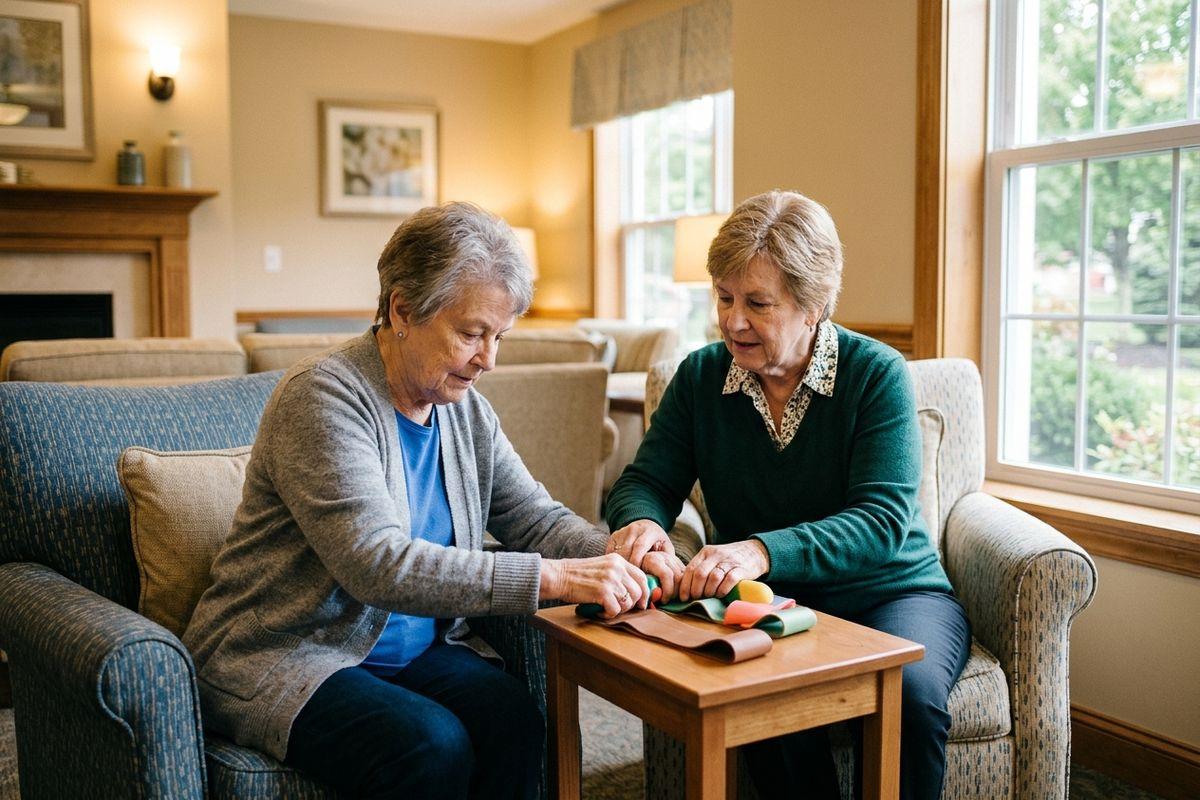
It also helps couples remain close when their needs begin to differ. One person may continue enjoying independent living while the other benefits from personal care or memory care, allowing them to remain part of the same community. As care plans evolve over time, transitions become less disruptive because familiar surroundings, relationships, and routines remain part of daily life.
What to Look for When You Choose a Senior Living Community
Not every senior living community offers a true continuum of care, so it helps to ask thoughtful questions before making a decision. Looking beyond today’s needs can help your family choose a community that continues supporting your loved one for years to come.
As you compare communities, consider whether they offer:
- Multiple living options on one connected campus
- Personalized care plans that are reviewed as needs change
- Clear communication with families throughout each stage of care
- Opportunities for couples with different support needs to remain close
- Team members who build lasting relationships with residents and families
- Programs, wellness opportunities, and social experiences across every lifestyle
Taking time to evaluate these qualities now can make future decisions feel much less stressful while giving your family greater confidence in the path ahead.
Take Your Next Step Toward Peace of Mind
Choosing a senior living community is about more than meeting today’s needs. It is about finding a place that can continue supporting your loved one as life changes while preserving the relationships, routines, and sense of belonging that make a community feel like home. A continuum of care offers that flexibility, giving families confidence that support is available whenever it becomes necessary.
At Juniper Village at Bucks County, you’ll find a connected community where every stage of the journey is approached with warmth, respect, and a focus on living well. Whether your loved one is ready for independent living or may benefit from additional support in the future, we’re here to help you explore the possibilities together. Contact our team today to find the perfect community for your loved one.