


Key Takeaways
- Digestion naturally slows with age, making fiber even more valuable
- Fruits, vegetables, whole grains, and legumes are delicious, fiber-rich choices
- Small daily swaps can meaningfully increase your fiber intake
- Staying hydrated helps fiber work the way it’s meant to
- Senior living communities can support healthy, enjoyable eating
Why What You Eat Still Matters a Lot
You’ve probably noticed that your body feels a little different from the way it did 20 years ago. Energy shifts, digestion feels slower, and appetite isn’t always what it used to be.
What ends up on your plate matters more than ever—and fiber is one of the most quietly powerful things you can add to it.
Getting enough fiber each day can support heart health, steady energy, and comfortable digestion—all without overhauling everything you love to eat.
A few thoughtful choices go a long way, and the good news is that high-fiber foods are some of the most satisfying around.
At Juniper Village at Bucks County, nourishing your body is an everyday joy—woven into a whole-person wellness approach that supports how you actually live.
Why Fiber Matters More as You Age
Digestion naturally slows down over time. That’s just how the body changes—and it’s nothing to worry about. But it does mean your gut needs a little more support to keep things moving comfortably. Fiber is one of the simplest ways to give it that support.
Beyond digestion, fiber plays a role in heart health by helping to manage cholesterol levels. It also keeps blood sugar more stable, which means fewer energy crashes and more consistent afternoons.
Appetite changes are common too, and they can quietly reduce your fiber intake without you even noticing—which is exactly why it’s worth a little extra attention.
Learning more about how healthy eating supports overall wellness can help you see just how much small changes add up.
High-Fiber Foods Worth Adding to Your Plate
Fruits and Vegetables Worth Reaching For
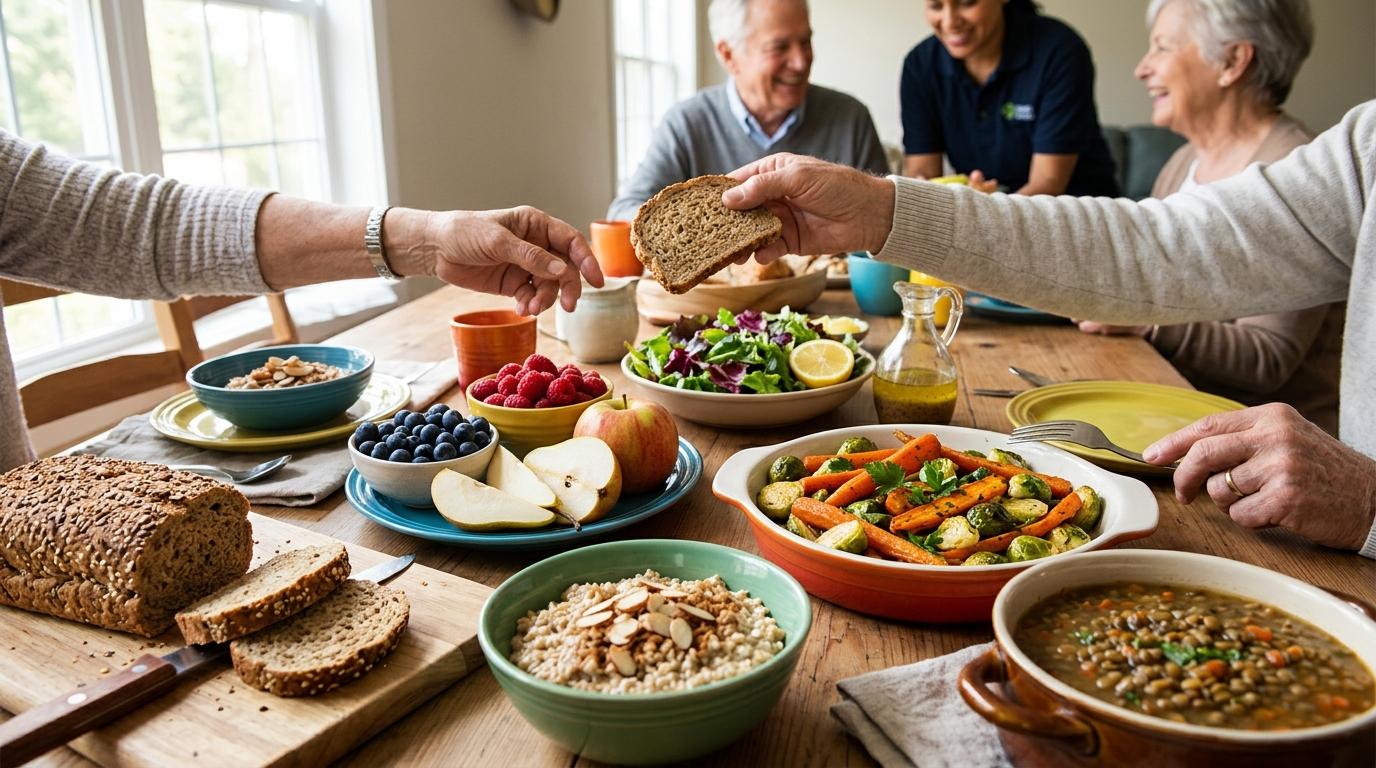
Think about the pop of a fresh blueberry, the crisp bite of a sliced pear, or the warmth of roasted carrots straight from the oven.
Berries, pears, and apples are naturally sweet, fiber-rich, and easy to work into any part of your day—morning oatmeal, an afternoon snack, or a light dessert.
Leafy greens and roasted vegetables bring color and crunch to your plate while delivering real nutritional value. A warm bowl of roasted Brussels sprouts with a little olive oil or a simple spinach salad tossed with lemon—these aren’t just good for you, they’re genuinely enjoyable to eat.
Whole Grains, Beans, and Other Pantry Stars
Oats, lentils, and chickpeas are everyday ingredients that quietly do a lot of work. A bowl of steel-cut oats in the morning or a hearty lentil soup at lunch delivers fiber in a way that’s filling and comforting. They’re crowd-pleasers for a reason.
Swapping white bread for a dense, seedy whole-grain loaf is one of the simplest changes you can make. You’ll taste the difference—and your body will feel it too.
These swaps don’t have to feel like sacrifices; often, the whole-grain version is the more flavorful one. For a deeper look at building a balanced plate, the National Council on Aging offers practical nutrition guidance tailored specifically for older adults.
Simple Ways to Eat More Fiber Every Day
Small Swaps That Make a Real Difference
You don’t need to revamp your entire routine to eat more fiber.
Sprinkling chia seeds or crushed walnuts into your morning yogurt takes about 10 seconds. Reaching for a whole apple instead of a glass of juice at breakfast adds fiber while keeping natural sweetness.
Small, consistent choices stack up over time.
Adding a handful of beans to a soup you’re already making, or choosing a brown rice side instead of white—these are the kinds of low-effort swaps that feel easy once they become habit. The goal isn’t restriction; it’s addition.
When you’re looking for inspiration, this guide to balancing nutrition and taste has plenty of approachable ideas.
Tips for Staying Hydrated Alongside Fiber
Fiber works best when it has water alongside it. Without enough hydration, high-fiber eating can actually feel uncomfortable—so the 2 go hand in hand.
Sipping water throughout the day, rather than all at once, is the easiest way to stay ahead of it.
Herbal teas and warm broths count toward your daily hydration and can feel especially comforting during cooler months. A mug of chamomile tea in the evening or a light vegetable broth at lunch adds up more than you’d think.
A Nourishing Life at Juniper Village at Bucks County
Good nutrition doesn’t happen in a vacuum. It thrives alongside connection, routine, and people who genuinely care about how you feel.
At Juniper Village at Bucks County, dining is a social experience—warm, welcoming, and tailored to your preferences, not just a checklist. Whether you’re in personal care, independent living, skilled nursing, or memory care, our focus is always on whole-person wellness.
Your personalized well-being plan can include nutritional support that fits your lifestyle—because what you eat should feel like something you look forward to every day, not something that feels like medicine.
Schedule a visit to be a guest at our dining table and discover how we can make wellness vibrant.